
Apparel MOQ Explained: How Minimum Order Quantities Shape Cost, Sourcing and Product Development
When the U.S. Fashion Industry Association published its 2026 benchmarking study in July, the headline was about consolidation, not tariffs. Roughly half of the surveyed companies said they plan to work with fewer suppliers over the next two years — close to triple the share that said so a year earlier, and a sharp reversal from the diversification scramble of the previous three years [1]. Fewer countries being added, fewer vendors being added, and more contract renegotiation with the partners already on the list.
Buried further down in the same research is a line that matters more to a product developer than the headline does. Asked why China remains part of the sourcing picture despite years of de-risking, Sheng Lu of the University of Delaware pointed to competitive flexibility, raw material depth, vertically integrated production — and low minimum order quantities [2].
That pairing is the argument of this piece. Apparel MOQ is not an administrative annoyance that procurement clears after the design is finished. It decides how many colourways you can launch, whether a first buy is a test or a bet, and which factories can say yes to you at all.
What the 2026 sourcing data actually shows
The study, conducted by Lu and Emilie Delaye with USFIA, surveyed executives from 30 U.S. brands, retailers, importers and wholesalers between April and June 2026 [1]. The relevant findings:
- About 21% plan to source from more countries through 2027, down from nearly 59% in 2025.
- About 26% plan to work with more suppliers, down from 41% the year before.
- Nearly half plan to source from fewer suppliers — roughly triple the 2025 share.
- Respondents collectively sourced from 49 countries, up from 46, but individually concentrated: 65% buy from 10 or more countries, while only 7% buy from 20 or more, down from 20–30% in 2024 and 2025.
- 58% are still diversifying sourcing, down from 83% a year earlier; 63% are renegotiating supplier contracts, up from 61%.
Read the caveats first: 30 companies, U.S.-centric, self-reported, at one volatile moment. Trade policy uncertainty ranked as the top business challenge, up from fourth in 2024, and long-term optimism fell to the lowest level in the study’s history [3]. None of that is a stable baseline. What is durable is the direction — the industry is moving from collecting suppliers to concentrating with the ones that can absorb complexity.
“Absorb complexity” increasingly includes MOQ. A vendor that can run a 200-piece first buy in three colourways, hold the greige for a reorder, and produce the traceability documentation now requested at quotation stage is doing something structurally different from a vendor that can only run 1,000 pieces of one thing. Around 60% of surveyed companies reported rising traceability requirements and higher compliance costs [3] — a fixed cost per style, pushing against small first buys. That tension lands squarely on MOQ.
Why apparel MOQ exists: the mechanics behind the number
A factory quoting 300 pieces per style is rarely being difficult. It is usually passing through constraints it does not control.
Fabric and dye lots are the binding constraint. Most garment factories do not knit or dye their own cloth; they buy from mills, and mills price around the economics of a dye vessel and a knitting machine’s setup. A dye vat needs enough fabric in it to run a stable, reproducible shade, and the colour has to match not only itself but the lab dip the brand approved. On the knitting side, changing pattern or weight costs calibration time and produces metrage of off-spec fabric before stable production begins. The useful distinction here is between a mill’s MOQ — the total it will book — and its MBQ, the minimum per colour or per pattern [4]. A 1,000-metre total split across five colours fails if the per-colour floor is 300 metres. This trips up more first collections than any other single mechanic.
Line setup is the second constraint. Cutting, spreading, grading, machine threading and first-piece approvals cost roughly the same whether the line runs 50 units or 5,000. Below a certain run length the labour per garment rises steeply enough that neither party likes the price.
Trims and hardware have their own minimums, often overlooked because they sit outside the garment: custom zipper pulls, moulded components, branded elastic, woven labels, heat transfers. A style with three custom trims stacks three minimums on top of the fabric minimum, and any one can set the floor.
Working capital is the fourth. The factory usually buys fabric before it is paid for finished goods. A small order consumes the same cash, which is why deposit terms move MOQ more reliably than pleading does.
One discipline note on numbers: MOQ benchmarks published online — 300 metres for custom-dyed woven, 100–300 pieces on stock fabric — come almost entirely from factories and consultants describing their own order books. Useful as negotiation starting points, useless as standards. Confirm the figure with your own mill and factory, in writing, per style and per colour.
What MOQ actually costs you
The unit-price curve is not linear, and it is not the main cost. Unit price falls as quantity rises, but the steepest part of the curve usually sits between the floor and roughly two to three times it; above that, savings flatten while inventory risk keeps climbing. Ask for the price at your intended quantity, at double it, and at triple it — the gap tells you what flexibility is worth.
The multiplier is where budgets break. A 200-piece minimum quoted “per style” sounds manageable. A 200-piece minimum per colourway, across four colourways, is 800 units — and if your size curve runs six sizes, your smallest size carries roughly 30 units of exposure that you cannot buy out of. The brand-designed cost of a collection is set by three multipliers — styles × colourways × sizes — and MOQ is applied to the one you expanded most casually. Worked example, illustrative only: 2 styles × 4 colourways × 200 = 1,600 units, before a single size split. Cut to 2 styles × 2 colourways × 200 = 800 units, and you have bought yourself a second drop with the other two colours once sell-through tells you which ones earned it.
The largest cost is the option you did not keep. A first buy sized to hit the lowest unit price rather than to learn something converts a development question into an inventory position. If the fit is wrong, or the shade reads differently in daylight, or the fabric pills after ten washes — failures that are diagnosable and largely preventable at sample stage — you discount 1,600 units instead of 400. The questions that matter are how fast you can get a reliable sample and how small a first buy the factory will accept.
What this means for designers and product developers
MOQ is set in the tech pack, not in the purchase order. Five decisions made during development determine most of it:
- Colourway count. The most expensive number in the document. Each colourway is potentially a separate dye lot, a separate cutting run, and a separate inventory position.
- Custom versus stock fabric. Specifying an exact Pantone shade generally triggers a custom dye lot and its minimum. Designing to a mill’s existing shade card — or accepting the closest standard shade for the first buy — usually removes that minimum entirely [4][5].
- Custom hardware and trims. A branded zipper pull can carry a larger minimum than the garment. Standardising components across styles inside one collection is one of the few moves that lowers MOQ and unit cost at the same time.
- Print method. Rotary and discharge printing carry screen setup and run minimums that make small quantities uneconomic; digital print does not, at a higher per-metre cost. For a first buy in the low hundreds, the dearer route is often the cheaper program [4].
- Shared blocks and graded patterns. Reusing a base block across styles keeps pattern development and fit work from being re-paid, and it lets the factory run related styles back-to-back on the same line setup.
The practical sequence: decide the fabric route first, because it sets the hard floor, then choose colourways and size ratios against that number. Choosing aesthetics first and discovering the minimum afterwards is how first collections get over-ordered. If you are weighing which fibres and constructions to commit to at all, the fabric selection criteria that actually hold up in wear and a structured approach to sourcing fabrics are worth reading before the tech pack is frozen.
Nine levers that actually move apparel MOQ
Not all of these are available to every program, but one or two usually are:
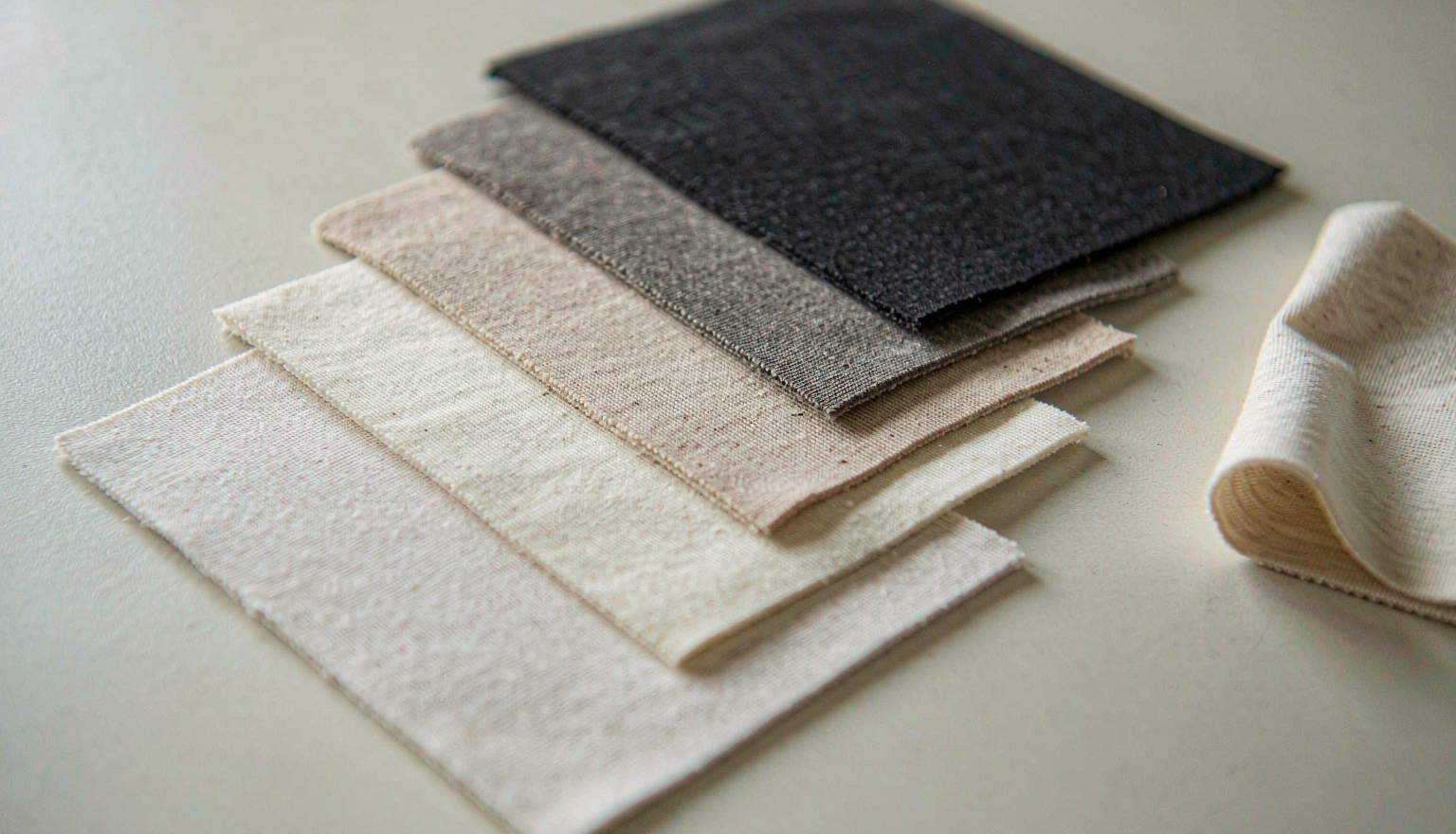
- Design to the mill’s shade card for the first buy; move to a custom Pantone once the style has earned a reorder.
- Book one greige lot and split the dye. One fabric booking across several colours is often acceptable where several small separate bookings are not.
- Consolidate fabric across styles. One base cloth across three silhouettes reads as one bulk order to the mill and as three products to your customer.
- Reduce colourways on the first drop, and hold the rest for a second drop driven by sell-through.
- Use digital print or heat transfer instead of rotary for small runs.
- Standardise trims and components across the collection so hardware minimums are met once, not per style.
- Offer a frame order with call-offs. Commit to a larger total volume to secure fabric pricing, then ship in instalments. This protects the factory’s planning and your cash flow, and it only works with a partner you intend to reorder from — which is exactly the consolidation pattern the 2026 data describes [1].
- Move the deposit. Raising an upfront payment removes the working-capital objection, which is often the real reason behind a high floor [4].
- Ask for the reorder MOQ in writing. The first-buy minimum is the one everyone negotiates; the reorder minimum is the one that determines whether a test-and-repeat model works at all.
Worth stating plainly: a factory that drops its minimum without any change to fabric, colour, payment terms or SKU structure is usually absorbing risk it has not priced. That arrangement tends to surface later as a quality or scheduling problem.
When a lower MOQ is the wrong target
Small first buys are not free, and the costs are not only financial. Below the floor you are choosing from a narrower fabric library, with colour matching limited to whatever the mill holds. Scheduling prioritises larger orders, so a very small run can sit behind bigger programs when capacity tightens. Fixed costs — quality inspection protocols, compliance documentation, testing — spread across fewer units, so per-unit overhead rises even when the factory absorbs it. And deadstock fabric, attractive as it is for minimums, trades away repeatability: the shade you get this season may not exist next season.
The question is not “what is the lowest MOQ available” but “what is the smallest first buy that still lets me learn something, at a unit cost I can survive, from a factory that will still be there for the reorder.”
How to read an MOQ quote: eight questions
- Is the minimum per style, per colourway, or per order?
- Does it assume stock fabric or custom-dyed fabric, and what is the difference in both price and lead time?
- What is the fabric mill’s per-colour minimum (MBQ) behind this number?
- What is the price at 1×, 2× and 3× this quantity?
- What is the reorder minimum, and for how long will the factory hold the fabric?
- What is the lead time at each quantity tier — not just at the quoted one?
- Which trims and hardware carry their own minimums, and are they included?
- Is the quote dependent on deposit terms?
Two quotes with the same MOQ can be entirely different offers. The one that answers question five well is usually the one worth building on. If you are deciding between development models at all — whether you bring the tech pack or the factory does — that choice changes who carries the fabric risk, and therefore what minimum you are quoted; the OEM versus ODM distinction is the place to start. Cost structure-wise, MOQ interacts with every other line in a garment cost breakdown, and it is the line most often left out of the model.
What to watch next
Three things are pulling in different directions, and the resolution will decide what “normal” MOQ looks like in a few seasons.
Downward pressure: smaller first orders and faster reorders are becoming structural rather than opportunistic, as more brands plan inventory against sell-through data instead of a seasonal guess. AI-assisted demand forecasting is part of this; surveyed companies already report using it for forecasting, inventory planning and product development [2][3]. Better forecasts justify smaller first buys.
Upward pressure: compliance and traceability obligations add fixed cost per style. Documentation that used to be a differentiator is increasingly requested at quotation stage, and the data has to be collected back up the chain — which takes longer to build than the deadline allows [6].
The resolution: the vendors that win the consolidation wave are the ones who can do both — run a small, well-documented first buy and supply the data that goes with it. That is a capability question, not a price question, and it is what a sourcing team should actually be testing when it shortlists partners.
For designers and product developers the takeaway is unglamorous: the number is negotiable, but it is negotiated in the spec, weeks before anyone asks for a discount. Decide your fabric route, colourway count and component strategy deliberately, ask the eight questions, and treat the first buy as an experiment you can afford to be wrong about.
Frequently asked questions
What is a typical apparel MOQ?
There is no industry standard. It depends on the factory’s business model and location, the product’s construction complexity, and above all the fabric route — stock fabric versus custom-dyed. Published benchmarks vary widely and are largely self-reported by suppliers, so treat them as conversation starters and get the figure for your own style, per colourway, in writing.
Why is MOQ quoted per colourway rather than per style?
Because each colour can be a separate dye lot at the mill and a separate setup on the line. The mill’s per-colour minimum (MBQ) is often the real constraint behind a factory’s per-style figure [4].
Can apparel MOQ be negotiated?
Usually, by 30–50% according to supplier-side guidance — but the movement comes from removing the factory’s actual objections: fabric minimums, working-capital exposure, and SKU complexity [4][5]. Changing none of those and asking for a lower number rarely holds.
Is a lower MOQ always better?
No. Very small runs typically mean a narrower fabric library, weaker scheduling priority, higher per-unit overhead for testing and documentation, and less shade repeatability across seasons. The right target is the smallest order that still answers a real question about the product.
What is the difference between MOQ and MBQ?
MOQ is the minimum total order a supplier will accept. MBQ is the minimum per colour or per pattern within that order. An order can clear the MOQ and still fail the MBQ [4].
References
- U.S. Fashion Industry Association (USFIA), 2026 U.S. Fashion Industry Benchmarking Study, conducted with Sheng Lu and Emilie Delaye, University of Delaware, July 2026 — findings reported by Supply Chain Dive, “Fashion brands plan to consolidate sourcing over next 2 years”, 29 July 2026. https://www.supplychaindive.com/news/fashion-brands-plan-to-consolidate-sourcing-over-next-2-years/826380
- USFIA, coverage of the 2026 Benchmarking Study webinar on “Sourcing Diversification 2.0” (vendor consolidation, supplier reporting capabilities, China’s low MOQs, AI adoption). https://www.usfashionindustry.com/component/tags/tag/sourcing
- International Trade Today, “Tariff Uncertainty Drives US Fashion to Strategic Consolidation: Report”, 22 July 2026 (trade policy uncertainty as top challenge; average apparel tariff rate cited at 21.6%; long-term optimism at 62%; ~60% reporting higher traceability requirements and compliance costs). Tariff and policy figures are as of July 2026 and change frequently. https://internationaltradetoday.com/article/2026/07/22/tariff-uncertainty-drives-us-fashion-to-strategic-consolidation-report-2607220041
- Fabric sourcing guidance on mill MOQ/MBQ mechanics, dye-lot minimums and below-minimum negotiation routes. https://www.massfabric.com/what-is-moq-fabric-sourcing-how-to-negotiate
- Sourcing guidance on typical MOQ structures by supplier type and strategies for working below standard minimums. https://pluckyreach.com/blog/how-to-source-fabric-for-clothing
- Digital Product Passport timeline for textiles under the ESPR (Regulation (EU) 2024/1781): textile delegated act expected around late 2027, with obligations following roughly 18 months later, and a ban on destroying unsold clothing and footwear applying to large companies from 19 July 2026. https://getclaro.ai/resources/guides/fashion-textile-dpp-timeline