
Racquet sports have quietly become one of the most dependable growth stories in apparel, and the numbers behind them are no longer niche. According to the Sports & Fitness Industry Association’s 2026 Topline Participation Report, 24.3 million Americans played pickleball in 2025 — a 22.8% year-over-year increase and a 171.8% rise over three years. Tennis reached 27.3 million US players, up 6.2% year over year. Globally, the International Tennis Federation estimates around 106 million people play tennis, and the International Padel Federation’s World Padel Report 2025 counts more than 30 million amateur padel players.
For apparel brands, participation is only the entry point. The more consequential shift is commercial: court categories are moving away from single “event kit” garments and toward coherent product systems — matched tops, skorts, warm-up layers and club pieces designed to sell together and reorder together. That shift changes what buyers order, what factories are asked to build, and how tennis apparel manufacturing gets evaluated in the first place.
This guide looks at what is actually changing in court-sport apparel, why it is happening, and what it means for product development, fabric selection, MOQ and sourcing in the 2026 season.
Why the Court-Sport Category Matters Now
Three forces are converging at the same time.
Participation growth is broad-based, not a spike. SFIA data shows casual pickleball participation (1–7 times per year) reached 16.8 million Americans in 2025, up 23.9%, while core players (8+ times per year) climbed to 7.48 million, up 20.4%. That split matters for apparel. Casual players generate first purchases; core players generate replacement cycles, club uniforms and repeat orders. Racquet sports overall now reach 20.6% of Americans, up from 13% in 2019, and seven of the eight racquet sports SFIA tracks posted year-over-year gains.
Infrastructure creates repeat demand. USA Pickleball’s 2025 Annual Growth Report recorded 18,258 known playing locations — more than 2,300 added in a single year — and 82,613 known courts nationwide. Clubs, leagues, academies and municipal programmes do not buy apparel as one-off novelty items. They buy team kits, staff uniforms and pro-shop assortments, and they reorder on a predictable cycle.
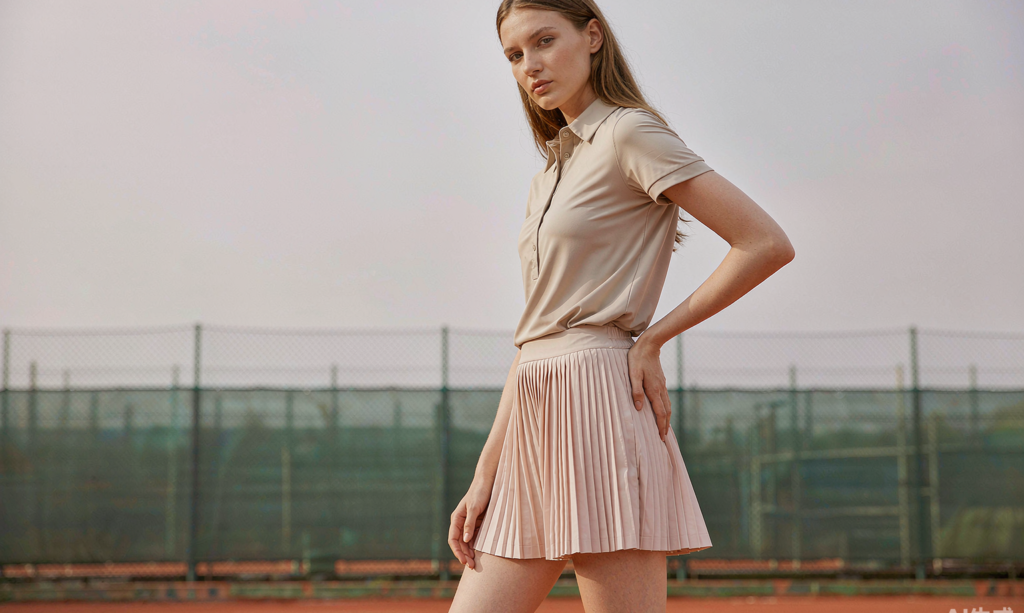
The aesthetic has moved off court. Pleated skorts, polished polos, quarter-zips and warm-up layers now sit comfortably in lifestyle retail, which is why market researchers continue to project steady category growth. Deep Market Insights, for example, estimates the global tennis apparel market at roughly USD 4.53 billion in 2026, growing to about USD 6.24 billion by 2031 (6.6% CAGR), with North America accounting for roughly 34% of revenue. Treat any third-party market forecast as an estimate rather than a guarantee — but the direction of travel is consistent across sources.
From Match Kit to Product System
The most useful way to understand 2026 court apparel is structural. Buyers are no longer asking for one loud tournament jersey; they are asking for a family of products that share a palette, a fabric story and a fit logic.
Cleaner palettes and texture-led fabric stories
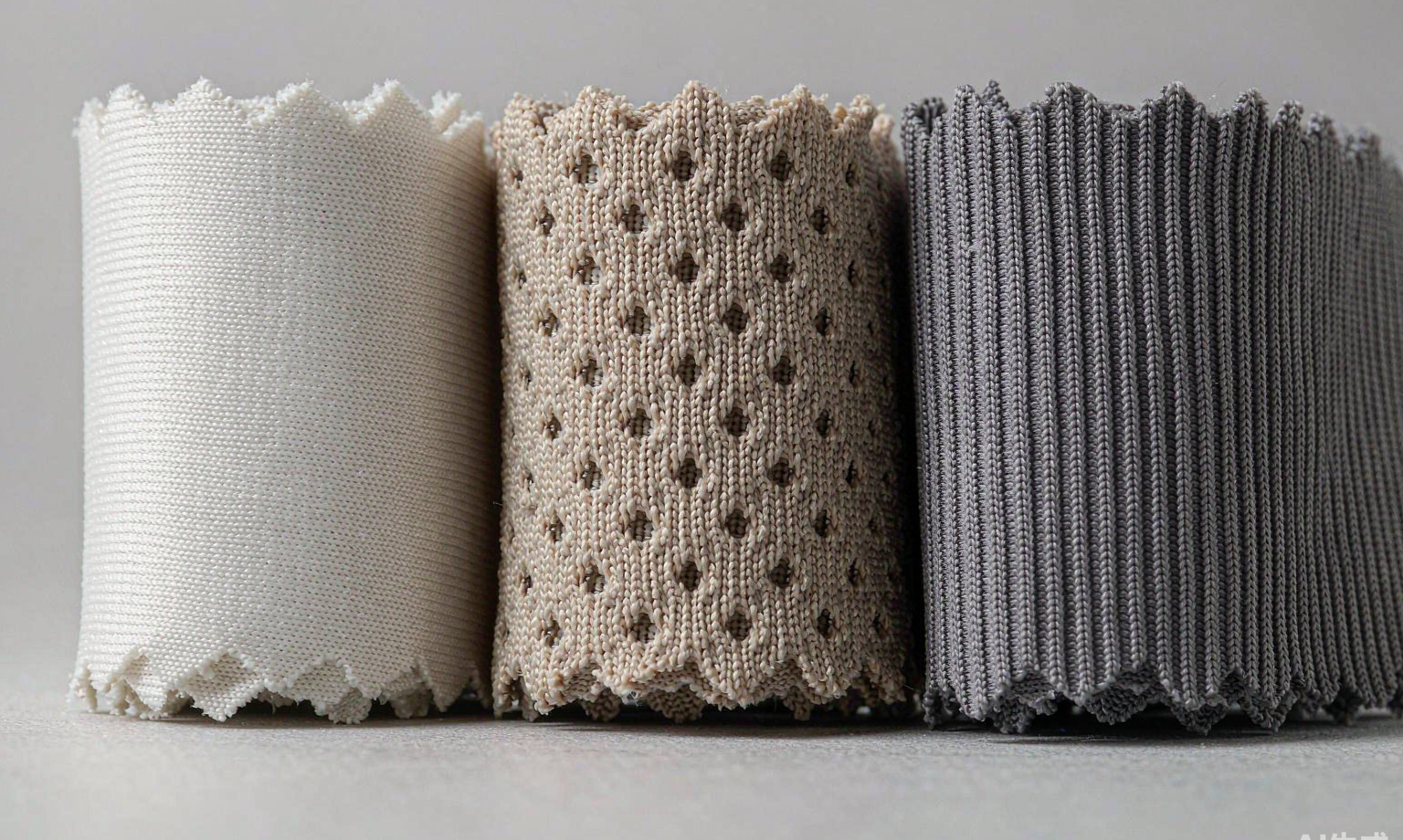
Industry sourcing commentary has converged on the same observation: buyers want product that looks premium off court, not only in match. In practice that means restrained navy, warm clay, off-white, muted green and tighter contrast control — instead of oversaturated kit logic. It also means hand feel is doing more of the selling: matte jersey, subtle rib and perforated knit are displacing heavy all-over prints, with decoration kept deliberately restrained so a garment can live in academy, travel and retail contexts.
Assortment logic beats hero graphics
Manufacturers working with club and academy programmes report that merchandising now happens at the family level: a match top, a skort or short, a warm-up layer and one merchandise extension, built on a single colour anchor that repeats cleanly across men’s, women’s and mixed programmes. This is a real development discipline, not a styling preference. A shared palette forces shared fabric decisions, shared trim language and shared lab-dip planning — and it rewards factories that can hold colour and hand feel consistent across multiple styles in the same production window.
Pickleball, Padel and Tennis Are Not One Brief
Brands often group these sports under “court apparel,” but the product briefs differ in ways that affect cost and construction.
Tennis remains performance-led. Garments need abrasion resistance for slides, strong moisture management for long points, and silhouettes that photograph well for club retail. Women’s tennis apparel is growing faster than the category overall, and skorts are the anchor product.
Pickleball is maturing from novelty event wear into organised club and community apparel. The fit brief is closer to casual activewear: easier movement, more forgiving silhouettes, generous pocketing for paddles and balls, and simple reorder logic so a club can buy the same style two seasons running.
Padel skews toward a polished club identity — elevated navy and clay stories, warmer lifestyle crossover pieces, and outer layers that work before and after play. Because padel players often socialise around the court, garments carry more of a “premium off-court” burden than pure performance kit.
For a product developer, the practical implication is that a court capsule should be specified per sport, with shared fabrics where it genuinely saves cost — not forced into one silhouette for all three.
Product Development Implications for Court Apparel
Skort construction: where most development time goes
The skort looks simple and is not. Several construction decisions drive both cost and customer satisfaction:
- Inner short design. Compression inner shorts in a higher elastane knit, with a gusseted crotch for stride length. Skimping here is the most common cause of “rides up” complaints.
- Anti-slip retention. A silicone gripper band inside the inner-short hem keeps the short in place during lunges. Specifying gripper width and silicone type matters more than most brands expect.
- Waistband engineering. A wide, encased elastic waistband with a clean topstitch holds the pleated outer in place. Waistband roll is a top return driver in reviews.
- Pleats and panel count. Knife pleats read classic and are cheaper; box pleats and engineered panel maps read premium but increase cutting and sewing time. The pleat map also decides whether a ball pocket can be hidden in the seam.
- Ball pocket. A discreet side or waistband-seam pocket sized for a tennis ball, with a bound opening so it does not gape.
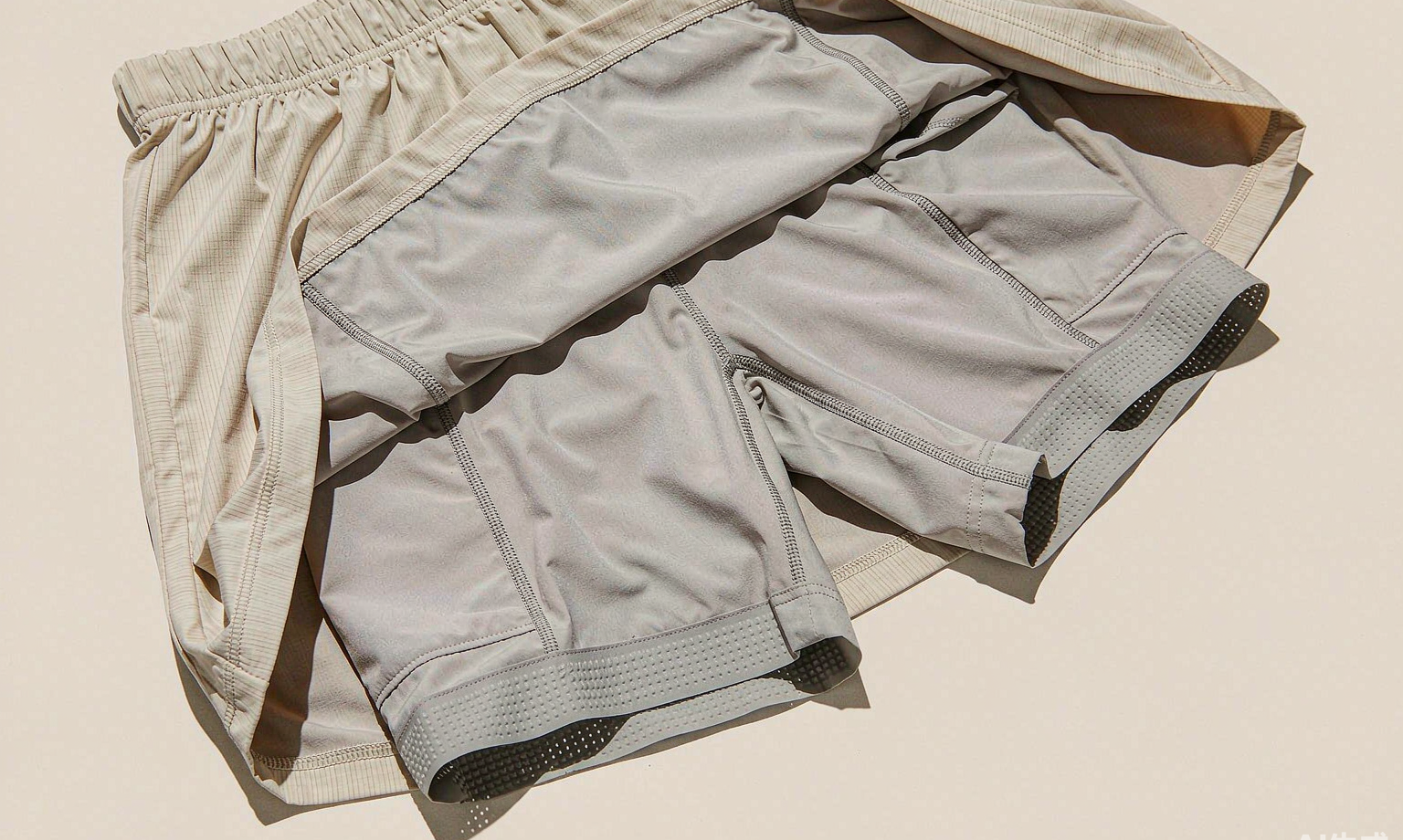
None of these are visible on a tech-flat sketch, which is exactly why they need to be locked in the tech pack. If sampling is going sideways on court product, the cause is usually a vague specification rather than a factory problem — a pattern covered in more detail in Yuuker’s guide to why activewear samples fail and how to fix them.
Court apparel lives or dies on four tests. Opacity under stretch (the squat-proof standard), stretch and recovery after repeated wash cycles, pilling and abrasion resistance, and colour fastness to light and sweat — the last one matters more here than in yoga, because outdoor court sports mean sun and sunscreen. Brands that specify test methods and acceptable results in the tech pack, rather than “high quality fabric,” get materially better first samples.
Fabric and Material Considerations
What fabric is best for tennis skirts and court apparel?
The workhorse is a four-way stretch knit — typically polyester or recycled polyester with 12–20% elastane, in the 170–230 gsm range for skorts and 140–180 gsm for tops. Matte finish is now strongly preferred over shine in premium assortments. Perforated or engineered mesh zones handle ventilation at the back yoke and underarm. For warm-up layers, a lightweight bonded or brushed-back knit carries the same palette forward. Yuuker’s breakdown of four-way stretch fabrics for shorts covers the trade-offs between weight, recovery and opacity in detail, and the same logic applies to skorts.
Sustainability is part of the same specification conversation. Recycled polyester and nylon are now baseline expectations in EU and US assortments, but recycled content alone no longer differentiates a product — which is why Yuuker’s honest look at the disadvantages of recycled polyester is worth reading before writing a fabric story.
Finishes, certifications and documentation
Sourcing commentary in 2026 describes a market where “every trend now arrives as a document request.” Buyers increasingly ask for certified recycled content (GRS or RCS, with transaction certificates per shipment), restricted-substance compliance (RSL reports, ZDHC MRSL alignment), verified performance data (for example AATCC 195 moisture management), named mill and dyehouse per style, and durability evidence such as ISO 12945 pilling results. PFAS-free finishes are becoming a de facto requirement for water-repellent outer layers in the US and EU.
The practical takeaway for a growing brand: choose factories that can produce the paperwork, not just the garment. A fabric that pills after five washes or loses recovery after thirty cycles will fail at retail regardless of its certification — and a certification without performance data will fail a retailer’s scorecard.
Sourcing, MOQ and Cost Reality in 2026
What MOQ actually means for a court capsule
Because court capsules are built as families, MOQ decisions compound. A five-style programme with three colourways is not one MOQ decision; it is up to fifteen fabric, trim and dye minimums. The usual mitigation strategies — a shared base fabric across styles, a single colour anchor with one accent, stock trims, and consolidated production runs that combine styles to reach minimums — work well here. Flexible manufacturers increasingly publish MOQ tiers, and several report offering 100–300 piece custom runs for emerging brands alongside traditional 500–1,000 piece programmes. Before committing, it is worth understanding how a garment production cost breakdown actually works, because the same style can carry very different unit costs depending on where the MOQ pressure lands.
Tariffs and landed cost
US trade policy reshaped sourcing maths again in 2026. A Section 301 action effective 24 July 2026 added permanent duties of 10% on goods from Bangladesh, Cambodia, India, Indonesia, Pakistan and Sri Lanka, and 12.5% on China, Vietnam and Thailand — on top of existing MFN apparel duties that commonly run from the low teens to around 32% depending on fibre content and construction. Bangladesh, Cambodia, Indonesia and Malaysia also gained access to a duty-free textile quota tied to purchases of US cotton and man-made fibres; industry analysis suggests that quota can widen a qualifying country’s cost advantage over Vietnam by up to roughly USD 5,000 per container on price-sensitive basics. Separately, the USD 800 de minimis exemption — the route that let low-value DTC parcels enter the US duty-free — has been suspended since August 2025, so every commercial parcel now needs a customs entry.
Two cautions apply. First, these rates are current as of September 2026 and have changed repeatedly; confirm your specific HTS codes with a licensed broker before costing. Second, tariff geography should not be the only lens. Technical court garments — engineered skorts, bonded outer layers, compression knits — depend on synthetic fabric supply chains and skilled operators that are still concentrated in a small number of manufacturing regions. The pragmatic model most brands are converging on is hybrid: regional production for fast repeats, Asia for technical and volume programmes.
Compliance: The Quiet Constraint on Every Fabric Claim
Regulation is now a product-development input, not an afterthought.
In the EU, the Empowering Consumers for the Green Transition Directive applies from 27 September 2026 and bans generic, unsubstantiated environmental claims — words like “eco-friendly,” “green,” “sustainable” or “climate neutral” — unless backed by recognised certification or verifiable evidence. It applies based on where the product is sold, so a brand outside the EU selling into it is equally in scope. (Note that the separate Green Claims Directive proposal was withdrawn in 2025; the ECGT is the operative instrument.)
The Digital Product Passport under the Ecodesign for Sustainable Products Regulation is coming, but the honest timeline is longer than most headlines suggest. ESPR entered into force in July 2024; the European Commission’s Joint Research Centre published its recommendations for textile DPP content in May 2026 — around 49 data points, with production batch as the minimum granularity — but the textile delegated act is expected around 2027, with mandatory application roughly 18 months after adoption. That puts realistic enforcement around 2028–2029. Meanwhile, EU retailers are already asking suppliers about DPP readiness and multi-tier traceability as a condition of preferred-supplier status, so brands that can produce composition, origin, certification and durability data per style today are effectively pre-qualifying themselves.
Practical Recommendations for Brands and Product Developers
- Build the capsule as a family. One colour anchor, one shared base fabric, one trim language, extended across match, training and warm-up product.
- Specify construction, not vibes. Lock gripper width, waistband construction, inner-short length, pleat map and pocket dimensions in the tech pack.
- Demand performance data with the fabric story. Recycled content plus a datasheet, or no claim at all.
- Plan MOQ around shared fabrics. Fewer, better base fabrics beat more styles with unique materials.
- Model landed cost, not FOB price. Duty tier, quota eligibility and the loss of de minimis all change the answer.
- Get compliance documentation flowing early. Composition, origin, certifications and test reports per style — before a retailer asks.
- Choose partners by category understanding. A factory that knows the difference between a tennis skort and a pickleball skort will save you two sample rounds — the same logic described in OEM vs ODM clothing manufacturers.
FAQ
What fabric is best for tennis skirts?
A four-way stretch knit — typically recycled polyester with 12–20% elastane at 170–230 gsm — with matte finish, verified opacity under stretch and tested stretch recovery. Perforated mesh zones at the back and underarm handle ventilation.
What is a realistic MOQ for a custom tennis skort?
Flexible manufacturers commonly offer 100–300 pieces per style for custom designs, with lower minimums on stock styles. Because court capsules share fabrics across styles, consolidated runs can help a small programme hit minimums economically.
How is pickleball apparel different from tennis apparel?
Pickleball product runs more casual in fit, with heavier pocketing requirements and simpler reorder logic for clubs; tennis product is more performance-led, with stricter demands on abrasion resistance, moisture management and silhouette.
Do environmental claims need documentation now?
In the EU, yes — from 27 September 2026, generic environmental claims require recognised certification or verifiable evidence under the Empowering Consumers Directive, regardless of where the brand is based.
Conclusion
The racquet-sport boom is real, but the opportunity in 2026 is not “more court apparel.” It is better-structured court apparel: product families with a coherent palette and fabric story, skorts engineered around retention and opacity rather than a sketch, fabrics that arrive with certificates and datasheets, and landed-cost models that reflect how much trade policy moved this year. Brands that treat tennis apparel manufacturing as a product-development discipline — and choose partners who can document what they claim — will be the ones club buyers call back.
For a closer look at how these pieces come together in a women’s court or studio programme, browse Yuuker’s women’s activewear collection or get in touch through the contact page.
References
- Sports & Fitness Industry Association (SFIA), 2026 Topline Participation Report — via Pickleball.com and The Dink coverage
- USA Pickleball, 2025 Annual Growth Report (usapickleball.org)
- International Tennis Federation participation estimate, as cited in industry sourcing coverage (sialkotsamplemasters.com)
- International Padel Federation, World Padel Report 2025
- Deep Market Insights, Global Tennis Apparel Market Report 2026–2031 (deepmarketinsights.com)
- USTR Section 301 Final Action, 24 July 2026 — via CargoTrans, Pham Fashion House, Apparel Digest / Fibre2Fashion
- CBP / customs-lookup.com, US import rules 2026 (de minimis suspension)
- EU Empowering Consumers for the Green Transition Directive; ESPR and JRC textile DPP content study, May 2026 — via textilepass.app, Style3D
- Fabric sourcing and documentation expectations — fabricbuys.com, Activewear Fabric Trends 2026