Sports Bra Manufacturing: What High-Support Engineering Really Requires
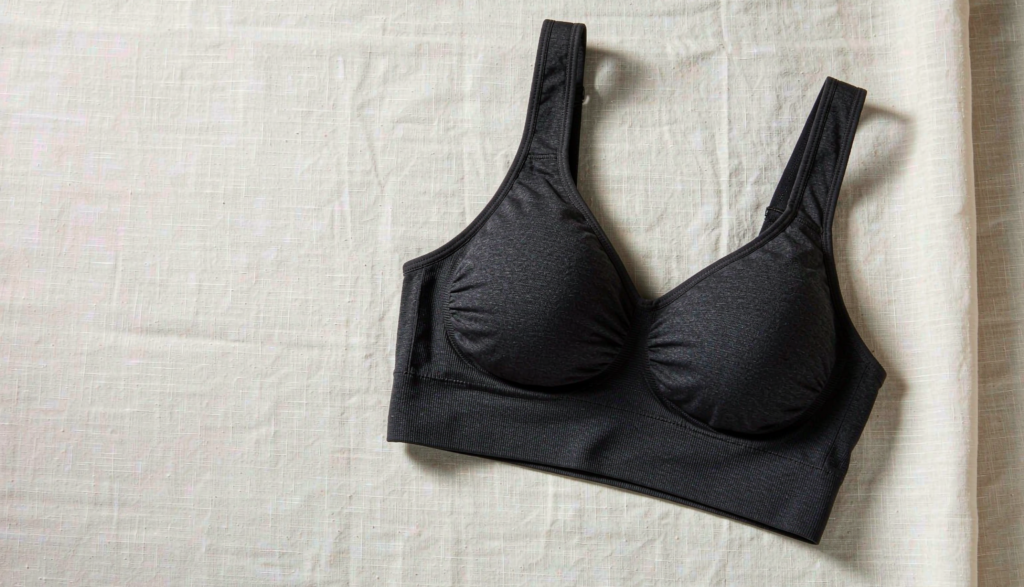
A sports bra is usually the smallest garment in an activewear range and almost always the hardest one to get right. It has to hold a moving load, stay anchored through repeated laundering, resist distortion in the band, and still feel acceptable against skin for an hour of running. Unlike a legging, where a good fabric carries most of the performance, support is produced by structure: cup architecture, underband modulus, strap anchoring, panel layout and grading. Fabric matters, but it does not rescue a weak pattern.
2026 added a useful new layer: published work measuring how specific cup constructions and laminate builds change breast motion, plus a maturing test regime that turns “high support” from a marketing phrase into a number. For brands, designers and product developers, the question is not whether the category is growing. It is whether the support you promise on the label survives contact with a real body, a real running gait and a real wash cycle. This guide covers what sports bra manufacturing involves now, and where the brief, the tech pack and the size range decide the outcome before a single garment is sewn.
Support is a construction problem, not a fabric problem
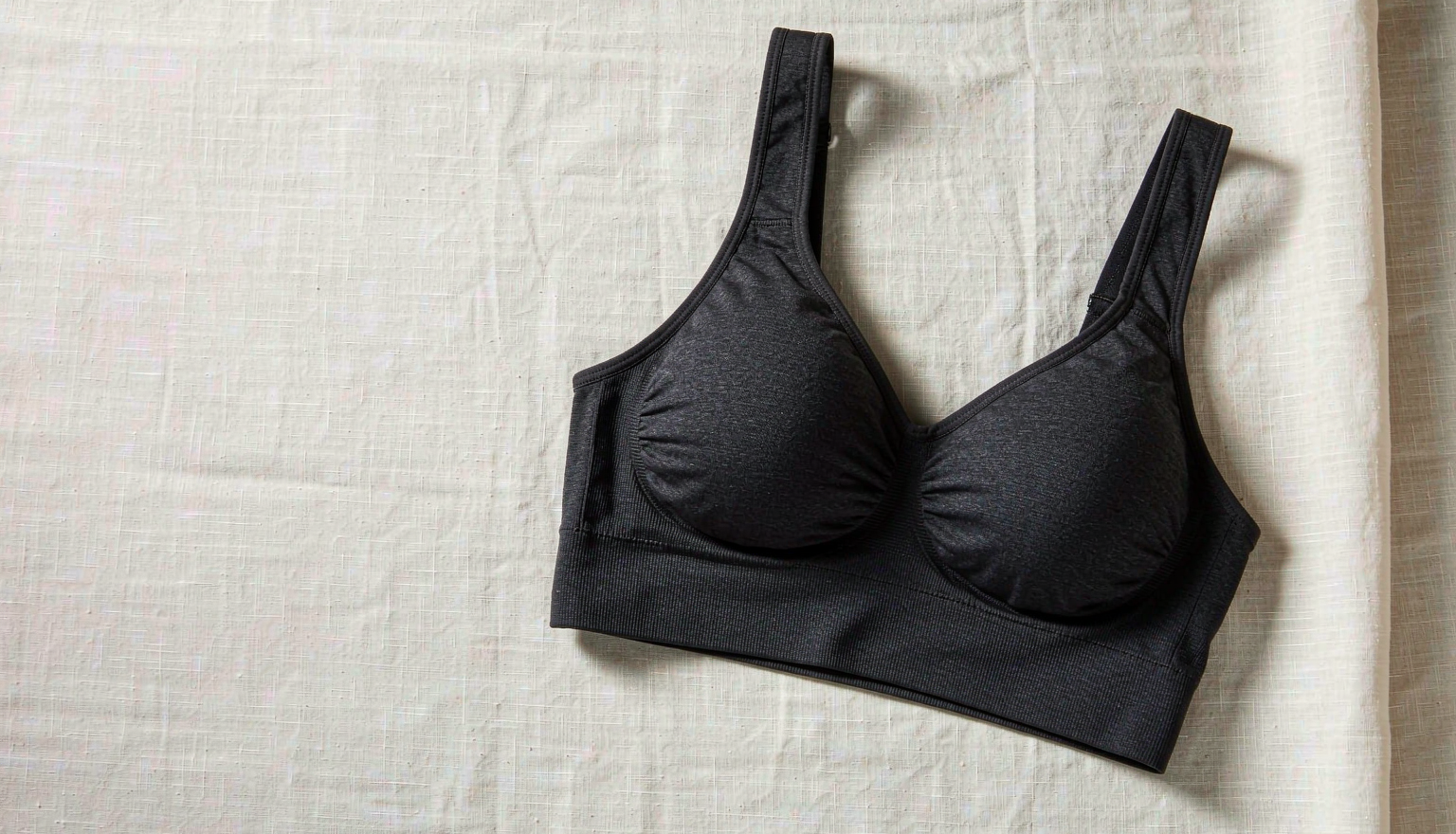
The University of Portsmouth’s Research Group in Breast Health — founded in 2005 and described by the university as the world’s leading centre for sports bra research, with more than 700 sports bras tested and over 8,000 research participants — reports that over a third of sports bra performance could be explained by five key characteristics: encapsulation style, padded cups, an adjustable underband, nylon as the principal fibre content, and a high neckline (University of Portsmouth, Research Group in Breast Health).
Four of the five are construction or fit decisions; only one is a fibre choice. Yet many briefs still arrive as a fabric conversation — “we want a high-support fabric” — when the garment needs a load-bearing structure. That misalignment tends to surface late, at fit approval, when the pattern is expensive to change.
The nylon point is worth noting for a second reason. Nylon-spandex remains the default base for structured bras because nylon gives a smooth hand, high abrasion resistance and strong recovery, while spandex supplies compression and shape retention. Polyester-spandex dries marginally faster and takes colour well, which is why it dominates print-led programs. Neither is “better” in the abstract; the choice follows the support mechanism and the decoration plan. If you are still narrowing down your base cloth, our guide to choosing activewear fabrics covers how stretch direction, recovery and opacity behave differently once a fabric is cut into a cup, a wing and a back panel.
Breast motion is three-dimensional — so the brief should be too
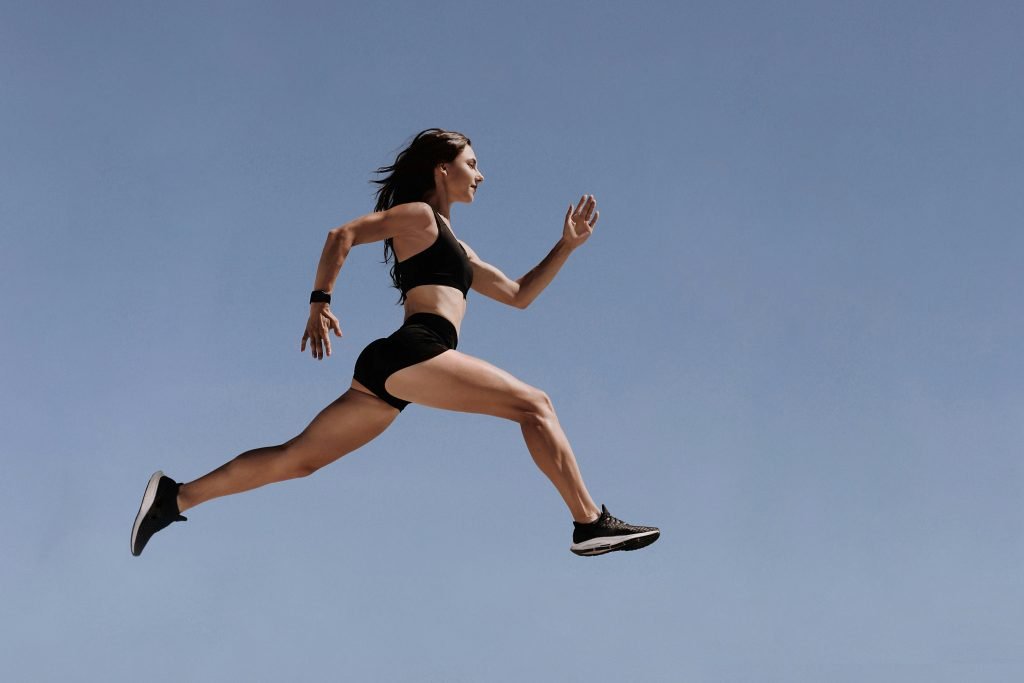
The reason single-axis thinking fails is visible in the biomechanics. In a study of 15 D-cup participants walking at 5 km/h and running at 10 km/h on a treadmill, Scurr, White and Hedger found that the breast followed a figure-of-eight pattern through four movement phases, and that 56% of overall breast movement was vertical (Scurr et al., Journal of Applied Biomechanics 25(4):322–329, 2009, PubMed 20095453).
The headline number people quote is the 56%. The more useful number is the remaining 44%, which happens in the medio-lateral and anterior-posterior directions. A bra designed only to stop vertical bounce — the spec most brands still write — addresses roughly half of the problem. Lateral and forward-back control lives in the parts of a pattern that are easiest to under-specify: side panels and wings, underarm depth, strap attachment angle, and the height and rigidity of the neckline edge.
The same research group has also published preliminary work showing that maximum bounce reduction is not automatically the target. Using a first-of-its-kind whole-body female-specific musculoskeletal model, Dr Chris Mills and colleagues simulated varying breast support during running and reported that bras eliminating breast movement led to higher spinal moments, which could raise the risk of lumbar back pain (University of Portsmouth, Hold-up: are high support bras bad for the back?). The work is explicitly preliminary and simulation-based, and it does not argue against high-support bras. It argues against writing “reduce motion as much as possible” into a brief, because pressure comfort and load distribution belong to the same system. A separate finite element study published in Modern Textile Technology (2026, 34(07):79–89) reached a compatible conclusion from modelling: high-support structures control motion effectively but raise interface pressure, while medium-support constructions distributed pressure better.
The practical translation: brief by intended activity and by a pressure comfort ceiling, not by a maximum bounce-reduction figure. A running bra, a training bra and a studio bra should never be developed from the same support assumption.
What the 2026 cup-structure research changed
The most directly useful new study for product development was published in Textile Research Journal this year. Sang, Zhang, Pang, Cui and Liu combined four-dimensional breast scanning, composite fabric engineering and cup-structure optimisation for high-support sports bras, with attention to larger and ptotic breasts (Sang et al., Textile Research Journal, 2026, DOI 10.1177/00405175261458655).
Ten participants ran at 8 km/h while dynamic breast models were captured with a Temporal 3dMD system, both bare-breasted and bra-wearing. The breast surface was divided into 12 directions at 30° intervals, and direction-specific deformation was quantified against the papilla base, with a vibration attenuation rate used to score motion reduction. Key dynamic frames — points of pronounced upper-breast deformation — were then unfolded into two-dimensional full-cup patterns, and two cup structures (T-shaped and double-vertical) were tested with two laminated fabric builds, with interface pressure measured using a Pliance-X system.
Three findings matter for anyone writing a tech pack:
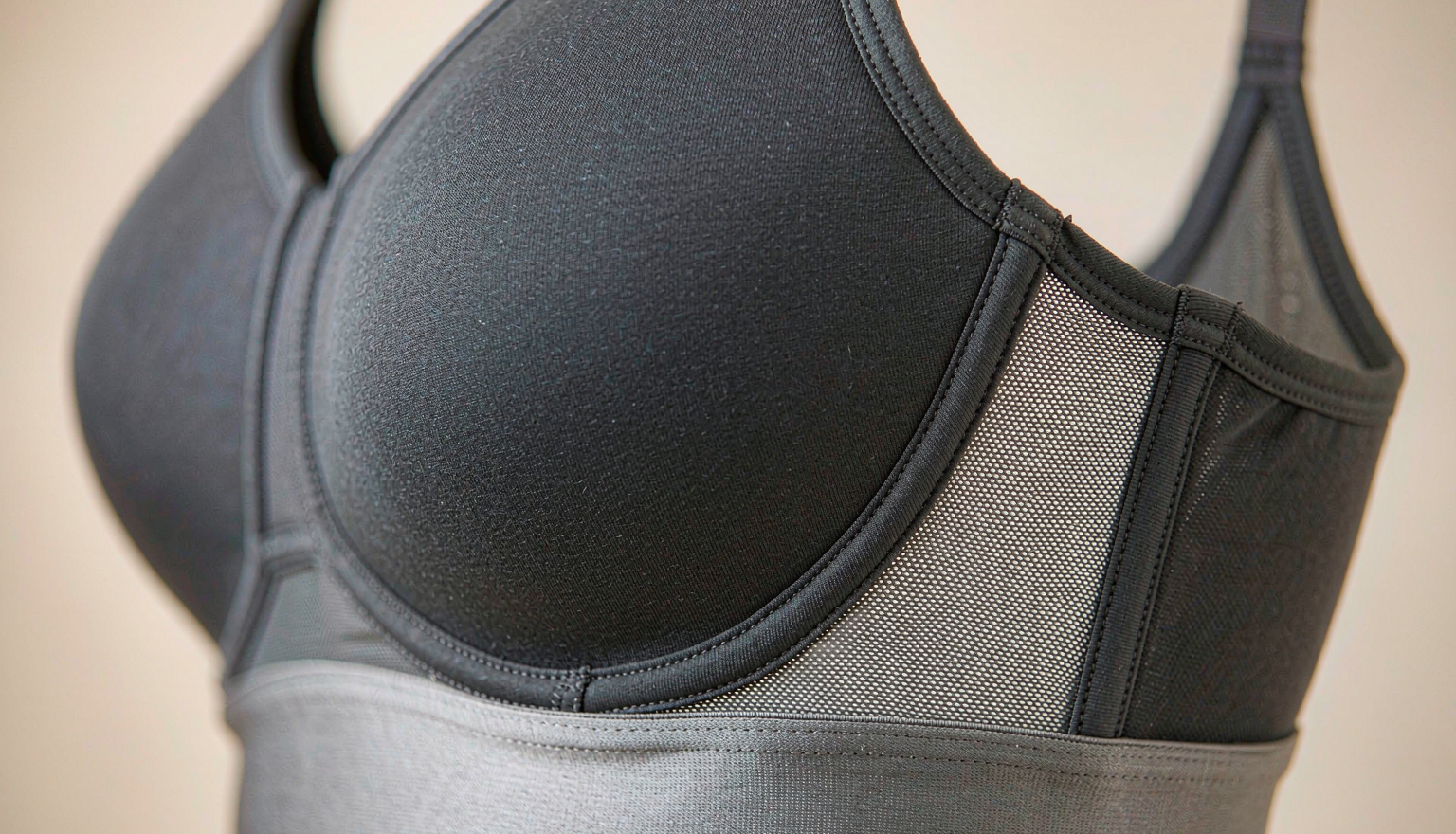
- Cup seam architecture changes measured motion control. The double-vertical cups showed higher vibration attenuation than the T-shaped cups in most assessed directions, with the clearest differences in the upper-breast and upper-lateral regions.
- Laminate build-up is a performance variable. The three-layer laminated fabric showed higher attenuation values than the two-layer fabric in pairwise comparisons.
- Pressure stayed within an acceptable range in the tested configurations, and incorporating upper-breast deformation data improved full-cup conformity in dynamic motion.
The caveats matter as much as the results: ten participants is a directional signal rather than a universal recipe, the protocol covered running at one speed, and two cup structures do not span the market. What the study does establish is that seam direction and laminate layering are specifiable variables with a measurable effect on motion — so they belong in the document you send to a factory, with the reason attached, rather than in a designer’s preference.
Encapsulation, compression, and the hybrid your line probably needs
Compression styles press breast tissue against the chest wall; encapsulation styles use shaped cups or panels to contain each side separately; most commercially successful high-support bras are a hybrid of the two. The University of Portsmouth’s own evidence summary points the same way — encapsulation style, padded cups and an adjustable underband all appeared among the characteristics associated with greater support, and all three are structural rather than fibre properties.
Size range is where construction choice usually goes wrong. A compression crop top that performs acceptably at a smaller cup volume does not automatically scale upward, because the fabric tension that contains a smaller volume can become uncomfortable or ineffective as volume increases. Research published in the Journal of Sports Sciences in 2026 and led by Dr Jenny Burbage found that 93% of elite female football referees reported at least one breast or bra-related issue during officiating, and that the most-worn style — the compression crop top — was frequently unsuitable across the body types represented among those officials (University of Portsmouth, UEFA breast health guide announcement).
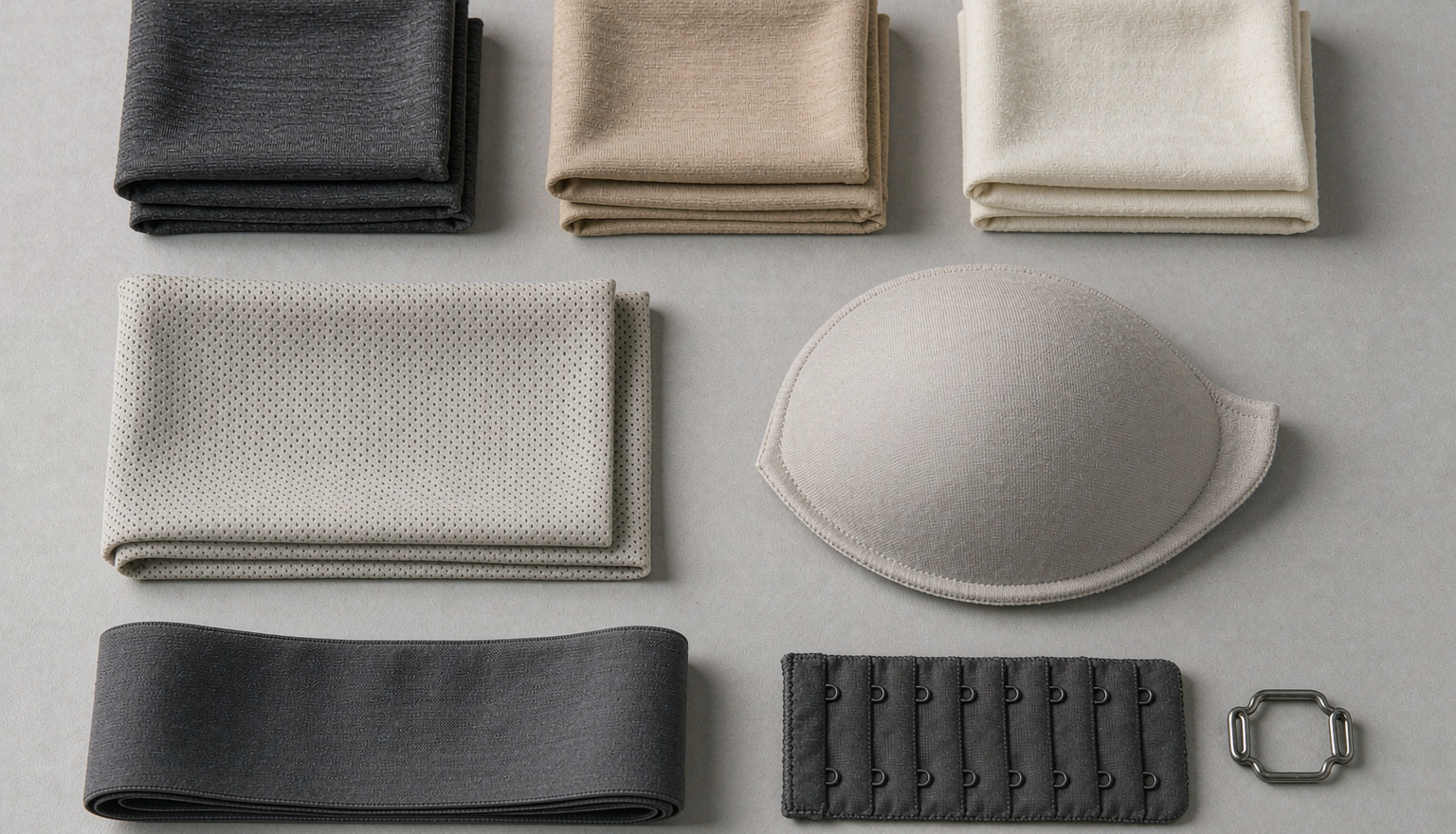
For manufacturing, the construction decision cascades into tooling and process: moulded cup tooling, cup seam layout, channeling for structured edges, power-mesh panel insertion, and bonded versus stitched assembly at neckline and armhole. All of it must be planned before sampling — cup tooling and panel layout cannot be fixed with a minor measurement change.
Grading is where support usually fails
A sports bra that fits at the middle of the range and fights at the ends is almost always a grading problem, not a fabric problem. Band and cup are separate axes. When cup volume grows, load moves outward and upward, so the demand on the cradle, wing depth, underband and strap anchors changes as well. Factories that grade both axes on a single rule tend to push the load path into the straps, which is why larger sizes migrate, roll or dig.
The fit starting point is also weaker than most brands assume. The University of Portsmouth reports that over 80% of women have been reported to be wearing the wrong size bra, and advocates fitting against “best fit” criteria — underband level and tension, complete cup enclosure with no bulging or gaping, seam line following the natural breast crease, centre front sitting flat, straps comfortable without carrying the support load — rather than a tape measure alone. Governing-body and military programs have moved the same way: the British Army’s sports bra fitting and issue service (BraFIS), introduced in 2020, was followed by research analysing data from more than 300 recruits, which reported that bra-related issues fell from 75% to 61% while more than half of recruits still experienced at least one bra or breast-related issue (University of Portsmouth, Why functional bra support is essential in the British Armed Forces).
Three consequences follow for a development team. Fit the largest cup in your planned run, not the middle. Write regrade rules for cradle, wing and strap anchor explicitly. And decide consciously how wide the size range goes, because every band-and-cup combination you add is a real SKU with real tooling, fabric and QC cost behind it — not a line on a chart.
How support claims get verified in sports bra manufacturing
“High support” used to be a self-declared label. That is changing. In February 2024, the German testing house Hohenstein announced a method that measures the support level of sports bras objectively, now behind a quality label. The test device, MODY, is a 3D-printed torso with defined underbust circumferences and interchangeable cups that moves in three directions — up/down, right/left, forwards/backwards — while movement of the chest point is tracked and compared with the same measurement taken without a bra. The result, a reduction in range of movement, is used to classify the product as low, medium or high support and to benchmark it against other products on the market (Hohenstein, Objective sports bra testing fills a gap in the market; Quality Label Bra Support factsheet).
Two details are worth copying even if you never buy the test. Support testing only counts alongside a fit test on human fit models — the standard reportedly begins at sizes 80B, 80C and 80D, with 90B–90D planned, and passing the fit test is a prerequisite for the label. And movement is tested in all three directions, the same point the 2009 displacement study makes from the other end.
You can build a usable internal protocol now: treadmill and jump sequences at the intended impact level, with a written record of breast movement, underband displacement and migration, strap slip, neckline gapping, underarm rubbing and pressure points. Pair it with standard component testing — commonly referenced methods include ISO 20932 for the elastic behaviour of fabrics, ASTM D4964 for tension and elongation of elastic fabrics, AATCC 195 for liquid moisture management and AATCC 61 for colourfastness to laundering. Control elastic substitution tightly: a visually identical underband elastic with different recovery can change the finished product’s support without changing anything a QC photo would catch. That inspection logic is the same one behind our note on factory quality systems for 2026 — catch a component change before it becomes a bulk run.
One rule protects the brand here. Do not publish a percentage bounce-reduction claim unless you hold a report that states it for the exact construction, cup size and material system you are selling. Support numbers are construction-specific; they do not transfer between styles.
What it does to cost, MOQ and the sampling plan
Support structures are tooling-heavy and trim-heavy, and that shows up in three places: cup development adds tooling or moulding cost per size build; strap and closure systems add hardware, more pieces to attach and more seams to control; and the fit panel requirement multiplies sample rounds, because one development sample in the middle size cannot validate a band-and-cup range.
MOQ then interacts with the size curve rather than just the style count. Because minimums are normally quoted per colour per style, a genuinely inclusive range can consume the same minimum across more SKUs than a three-size range does, which changes both inventory exposure and the break-even calculation. The mechanics of that trade-off are covered in more detail in our breakdown of garment production cost factors and in our analysis of apparel MOQ and sourcing strategy. Supplier-published figures commonly quoted for cut-and-sew sports bras start around 300–500 pieces per colour per style, with higher entry points for seamless programs that need circular-knit machine time — but those numbers come from suppliers’ own marketing pages rather than an industry standard. Treat them as a negotiation benchmark, confirm the actual terms in writing, and ask specifically how the minimum is broken down across the size range, how many sample revisions are included, and whether a fabric or elastic substitution mid-program triggers re-approval.
What belongs in the brief
A sports bra tech pack that will survive bulk production usually contains all of the following:
- Intended activity and impact level, stated as the design target — not “high support” as a generic adjective
- Target band and cup size matrix, plus the size used for fit approval
- Support mechanism: compression, encapsulation or hybrid, with the reason recorded
- Cup build: moulded, seamed, removable pad or compression-only, with tooling ownership stated
- Underband specification: width, elastic modulus, recovery, finished circumference and tolerance
- Strap system: width, stretch direction, attachment position, adjustability model
- Fabric system per zone — cup, wing, back, lining — with stretch direction, recovery, opacity and pilling expectations
- Closure and hardware, movement test protocol, and wash / dimensional stability criteria
- Approvals ownership: who signs off fabric, trim, fit and colour, and in what order
Where the category is heading
The research pipeline is no longer confined to journals. The Portsmouth group has worked with the Football Association on player prescription, with UEFA on a medical and anti-doping sports bra guide that includes dedicated guidance for pregnancy and post-partum players, and with the British Army on issued kit and fitting policy. Support is being treated as functional equipment with measurable performance, not as a soft accessory — and that creates an opportunity with little to do with fabric storytelling. A documented size range, a real fit standard and fit guidance that reaches the customer are becoming product features in their own right, most obviously where current offerings are weakest: larger cup volumes, band sizes above the common commercial ceiling, and post-partum wearers. Those are development problems, and development problems are where manufacturing partnerships earn their margin.
Questions brands ask before committing to a program
Can we develop a high-support bra from a competitor reference sample?
A reference sample is a useful communication tool, but it cannot be copied into a specification. Construction inside the cup, elastic modulus and grading rules are not visible from the outside. Use it to align on feel and coverage, then write your own specification and validate it on your own fit panel.
How many support tiers do we actually need?
Fewer than most line plans assume, but each tier must be genuinely differentiated — fabric system, cup construction, underband and strap system. Two clear tiers with documented performance usually beat four that differ only in styling.
Is seamless construction a shortcut to high support?
No. Seamless removes side seams and can deliver excellent low-to-medium support, but high-impact encapsulation generally needs structured cup construction that circular knitting cannot produce on its own. Match the construction to the support target.
What is the most common cause of a failed sports bra sample?
Over-specified compression with under-planned structure: a band that does not anchor, a neckline that gapes when the wearer lifts her arms, and a cup never fitted at the largest volume in the range. These follow the same pattern as the general causes of activewear sample failure — a performance target written into the brief without the construction to deliver it.
—
References
- Scurr, J., White, J., Hedger, W. (2009). Breast displacement in three dimensions during the walking and running gait cycles. Journal of Applied Biomechanics, 25(4), 322–329. https://doi.org/10.1123/jab.25.4.322 — https://pubmed.ncbi.nlm.nih.gov/20095453/
- Sang, M-w., Zhang, L-y., Pang, R-d., Cui, M-h., Liu, L. (2026). Integrating 4D scanning and material optimization for sports bra design. Textile Research Journal. https://doi.org/10.1177/00405175261458655
- 于杰, 孙玥, 易洁伦, 顾冰菲 (2026). 《不同支撑强度运动文胸的有限元建模仿真与性能评估》. 现代纺织技术, 34(07), 79–89. http://journal.zjtextile.com.cn/CN/Y2026/V34/I07/79
- University of Portsmouth, Research Group in Breast Health (research summary: five characteristics associated with sports bra performance; bra fitting and breast pain findings). https://www.port.ac.uk/research/research-groups-and-centres/research-group-in-breast-health
- University of Portsmouth, Hold-up — are high support bras bad for the back? (preliminary research, European Journal of Sport Science). http://www.portsmouth.ac.uk/news-events-and-blogs/news/hold-up-are-high-support-bras-bad-for-the-back
- University of Portsmouth, From first kick to post-partum: Scientific research informs new UEFA breast health guide for footballers (2026 referee study in Journal of Sports Sciences; UEFA Medical & Anti-Doping Sports Bra Guide). https://guidelines.docstore.port.ac.uk/news-events-and-blogs/news/from-first-kick-to-post-partum-scientific-research-informs-new-uefa-breast-health-guide-for-footballers
- University of Portsmouth, Why functional bra support is essential in the British Armed Forces (BraFIS evaluation, research conducted May 2021 – September 2023). https://www.port.ac.uk/news-events-and-blogs/news/why-functional-bra-support-is-essential-in-the-british-armed-forces
- Hohenstein (2024, February). Objective sports bra testing fills a gap in the market. https://www.hohenstein.com/en/press/press-releases/objective-sports-bra-testing-fills-a-gap-in-the-market
- Hohenstein, Quality Label Bra Support — Factsheet (2025, February). https://www.hohenstein.in/fileadmin/user_upload/Downloads/Factsheets/Factsheet_Hohenstein_Quality_Label_Bra_Support_EN.pdf
Note on supplier-published figures: MOQ and lead-time ranges referenced in this article are drawn from suppliers’ own published marketing material and are not industry standards. They are included as negotiation benchmarks only and should be verified with any manufacturer before being used in planning.