
Apparel Digital Product Passport: What It Means for Product Development and Manufacturing
For two years, most discussion of the EU’s Digital Product Passport (DPP) stayed at the concept stage: a QR code on a care label, a traceability utopia, a compliance storm in 2027. That vagueness ended in May 2026, when the European Commission’s Joint Research Centre (JRC) published a study that proposes, field by field, what a garment’s passport will actually contain — including two scores that will sit in public view next to your product photos.
If you develop, source or manufacture apparel for the EU market, the useful question is no longer “what is a DPP?” It is: which product decisions will this data make visible, which of them are you already making, and what should you change before the rules are final? This article walks through where the apparel digital product passport stands as of October 2026, what it is expected to carry, and what it changes for fabric selection, testing, documentation and the way you brief a factory.
Where the Apparel Digital Product Passport Rules Stand (as of October 2026)
The legal foundation is the Ecodesign for Sustainable Products Regulation (ESPR, Regulation (EU) 2024/1781), in force since 18 July 2024. ESPR is a framework regulation: it does not itself impose passport duties on garments. Concrete obligations arrive product group by product group through delegated acts, and textiles — apparel in particular — sit in the first priority wave of the Commission’s 2025–2030 Working Plan, adopted in April 2025.
The milestones that matter for apparel teams:
- 9 February 2026 — the Commission adopted acts on the destruction and disclosure of unsold apparel, clothing accessories and footwear. The destruction ban applies to large companies from 19 July 2026. This is real ESPR implementation, but it is not the DPP.
- 13 May 2026 — the JRC published Study on DPP content for textile apparel products under ESPR, the most detailed official signal so far of passport content: roughly 49 data points organised into four categories. It is preparatory work, not law, and explicitly does not represent the Commission’s final position.
- 15 July 2026 — Commission Implementing Decision (EU) 2026/1736 referenced six CEN/CENELEC harmonised standards for DPPs in the Official Journal, covering identifiers, data carriers, APIs and access rights. The technical plumbing is being standardised now.
- 20 July 2026 — industry trackers report the EU’s central DPP registry went operational, meeting the Article 13 deadline of 19 July 2026. The registry is Commission infrastructure, not a business obligation for apparel yet.
- Timing — Commission signals (a DG GROW webinar in May 2026 and the Commission’s textiles page) point to adoption of the textiles delegated act in Q3–Q4 2027, with mandatory DPP application for textiles around 2029, after the transition period of at least 18 months required by ESPR Article 4(4). Any claim that “every garment needs a passport from 2027” misreads the timeline.
The mistake to avoid is treating 2029 as permission to wait. Passport data is manufactured upstream of the garment — at fibre, yarn and fabric level — and the JRC found that upstream supplier data practices are dominated by email chains and unstructured PDFs. Supplier data habits change over seasons, not weeks. If the delegated act lands in late 2027, the collections developed during 2028 will be the first to need compliant data. That means the fabric, trim, testing and documentation decisions being made right now are already inside the compliance window.
What the Passport Is Expected to Carry
The JRC study organises the proposed content into four categories, aligned with ESPR Annex III:
- Product identification — a unique product identifier (serialised GTIN or equivalent), model identifier, batch identifier, ESPR and PEFCR product categories, and HS/TARIC commodity codes.
- Producer identification — the responsible manufacturer or importer, with GLN facility identifiers.
- Product information — fibre composition, a mechanical robustness score, a recyclability score, recycled and organic content, substances of concern, environmental footprint, and care instructions.
- Compliance documentation — EU Declaration of Conformity, technical specifications and test reports.
Three design decisions deserve attention. First, granularity: the proposal works with three levels — model, batch and item — and sets the production batch as the minimum for most manufacturing-related data, while item-level identifiers stay voluntary at first. Second, access rights: data is tiered. Consumers see composition, scores, recycled content and a footprint performance class; recyclers with legitimate interest see more detail; authorities see conformity documents and calculation parameters. Third, and least discussed: the manufacturing facility is public data. If part of your value proposition is a factory nobody knows about, the passport framework will test that assumption.
There is also a structural asymmetry worth naming. The passport is the legal responsibility of the economic operator placing the product on the EU market — usually the manufacturer, or the importer when manufacturing happens outside the EU. But most of the data lives with upstream suppliers. The JRC itself notes that brands typically have strong visibility over Tier 1 assembly and weak visibility beyond it. Closing that gap is a supply chain project, not a software project.
The Robustness Score Turns Wash Testing Into a Published Number
The most consequential proposal for product teams is a robustness score of 0–10 measuring washing resistance. It is built from five standardised wash cycles (ISO 6330) and aggregates three sub-tests that already exist in most quality-control labs: visual inspection after washing (ISO 15487, covering appearance, pilling and seam integrity), spirality or torque (ISO 16322-3, reported as a percentage), and dimensional change (ISO 3759, also a percentage).
The JRC is explicit that this measures resistance to laundering stress, not garment lifetime — and that no abrasion or tear-strength requirements are on the table. Still, the shift is significant: a test most factories run quietly for internal QC becomes a structured, model-level number that any consumer can compare across brands.
What that changes in development practice:
- Fabric and finishing choices become scoreable. Resin-based finishes can lift the appearance-after-wash result while degrading fibre strength over time — a trade-off industry commentators have already flagged. Spirality interacts with yarn spinning method and knit construction, and mechanically recycled cotton tends to spiral more because of shorter staple length. There is a genuine tension between a recycled-content story and a robustness score, and it is better discovered in the lab than on a public scorecard.
- Test at sampling, not after bulk. If the score will be public, wash-resistance data belongs in proto and pre-production stages, alongside the fit and workmanship checks that already catch most sampling failures.
- Reconcile care labels with test conditions. The wash programme printed on your care instructions and the ISO 6330 programme used in testing have to tell the same story — a link between quality and labelling teams that most companies have never formalised.
- Budget for it. JRC modelling assumptions, as reported in industry summaries, put the robustness test at roughly €500 per model. Treat that as an indicative planning figure, not a quoted price, and assume testing scales with style count and colourways.
The Recyclability Score Rewards Mono-Material Construction
The second proposed score grades how recyclable a garment is, based on composition and construction. The JRC’s third-milestone proposal includes an illustrative threshold that should stop every activewear developer mid-sentence: products with more than 15% elastane would score 0 — 20% in nylon-rich blends. A score of 0 is a labelling outcome, not a product ban, but it is commercially visible.
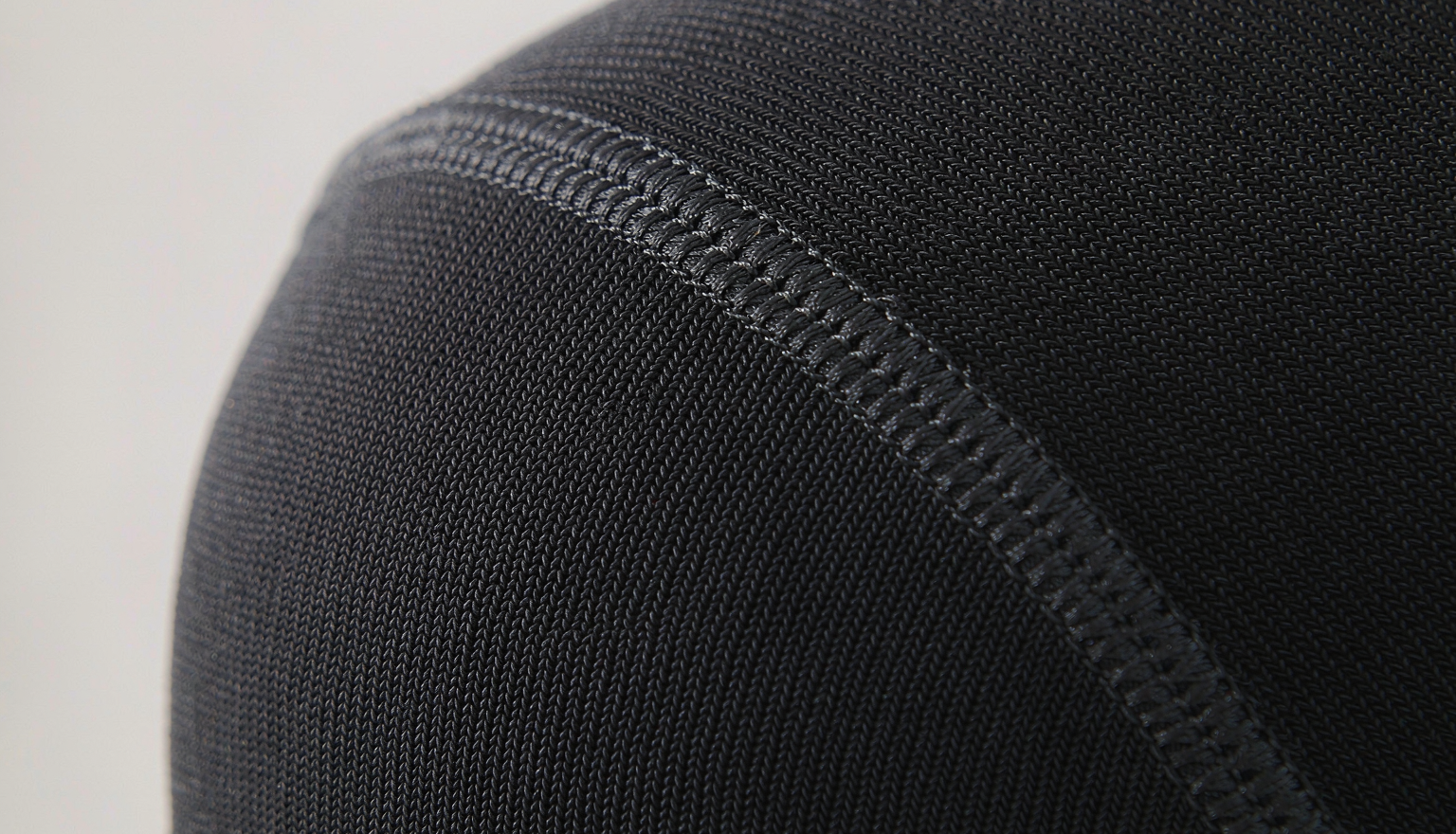
Points come from mono-material construction, matching inner and outer composition, and the absence of “recycling disruptors”: prints, coatings, bonded constructions, inseparable trims, metal rivets. Pathway points reward compatible recycling routes — pure cotton for chemical recycling into man-made cellulosics, or polyester-rich blends above roughly 80% for thermo-mechanical recycling.
For activewear, this is the sharpest edge of the entire framework. The category’s signature features — elastane stretch, bonded seams, welded pockets, PU coatings, large prints — are all, under the proposed logic, recyclability disruptors. Nobody is banning them. But a legging with 18% elastane and a bonded waistband will publicly read as 0 next to a competitor’s cleaner construction, and buyers and consumers will eventually see those numbers side by side.
The practical response is not panic redesign. The methodology is not final. It is:
- Record elastane percentage per style precisely, and where the spec allows, engineer stretch through fabric construction — mechanical stretch, textured yarns, knit architecture — rather than maximum elastane content, testing the durability consequences as you go.
- Question bonded constructions where a sewn alternative performs the same job.
- Reduce trim complexity and avoid coatings that serve no functional purpose.
- Start capturing, per style, exactly the inputs the future algorithm will use: composition per component, construction type, finishes, trims.
Recycled Content: an Auditable Number With a Definition Problem
Recycled content is the only indicator where the JRC proposes a mandatory performance threshold, alongside a disclosure requirement: percentage by weight under ISO 14021, plus the source of the material — pre-industrial, pre-consumer or post-consumer. Thresholds under assessment include around 20% recycled cotton in denim and roughly 15% recycled polyester in knitted and woven products, with lower levels explored for wool and nylon. All of these remain proposals, not law.
Two traps are already visible. The first is definitional: ISO 14021’s “post-consumer” does not map one-to-one onto ESPR terminology, so brands using GRS or RCS-certified yarns need to check how their certificates’ definitions align before reporting anything. The second is granularity: recycled content is expected at batch level, because yarn lots vary between production runs. A certificate filed once a year will not survive that requirement; mill-level chain-of-custody documentation attached to each purchase order will.
The broader point: a recycled claim stops being a marketing line and becomes an auditable per-batch number. That makes the fibre mill’s documentation part of your product spec — and makes honest conversations about the limits of recycled synthetics part of your fabric strategy.
Substances of Concern: the Weakest Link in the Data Chain
The JRC flags substances of concern (SoC) as the lowest-readiness data point in the entire proposal. The passport is expected to carry the substance name, its location within the product and its concentration — a level of chemical disclosure far beyond today’s binary pass/fail certificates. Industry feedback during the consultation was blunt: that data does not currently exist in a form that can be disclosed reliably, and the final requirement may well be softened. But the direction is clear. Chemical management will move from “certificate on file” towards itemised input inventories from dye houses, printers and trim suppliers — and trims and prints are inside that scope, not outside it.
What This Changes in How You Brief a Factory
Read together, these fields turn the tech pack into something closer to a data contract. The specifications that decide your passport scores — composition, construction, finishes, trims — are exactly the specifications your manufacturer executes. So the request list that accompanies your next quote matters as much as the price negotiation:
- Mill and facility identification, with GLN where available.
- Fibre composition per component, with tolerances.
- Recycled content per yarn lot, with chain-of-custody certificates.
- Substance declarations per input, structured rather than scanned.
- Wash-resistance test reports tied to batch numbering.
- An agreed split of testing responsibilities and costs.
None of this is exotic. It is the same discipline that separates factories which can hold a spec from factories which can merely quote one — and it costs far less to build into development than to retrofit after the delegated act. Brands working with partners on fabric sourcing and quality systems will recognise most of this checklist; the difference is that it stops being optional good practice and becomes market-access infrastructure. It also has a cost dimension: per-model testing, documentation time and supplier data management are real line items, and they belong in the product cost conversation now rather than after enforcement.
A Practical Checklist for the Next Two Seasons
- Map your identifiers. Confirm GTIN model-level IDs exist for every style and that production batches are numbered consistently.
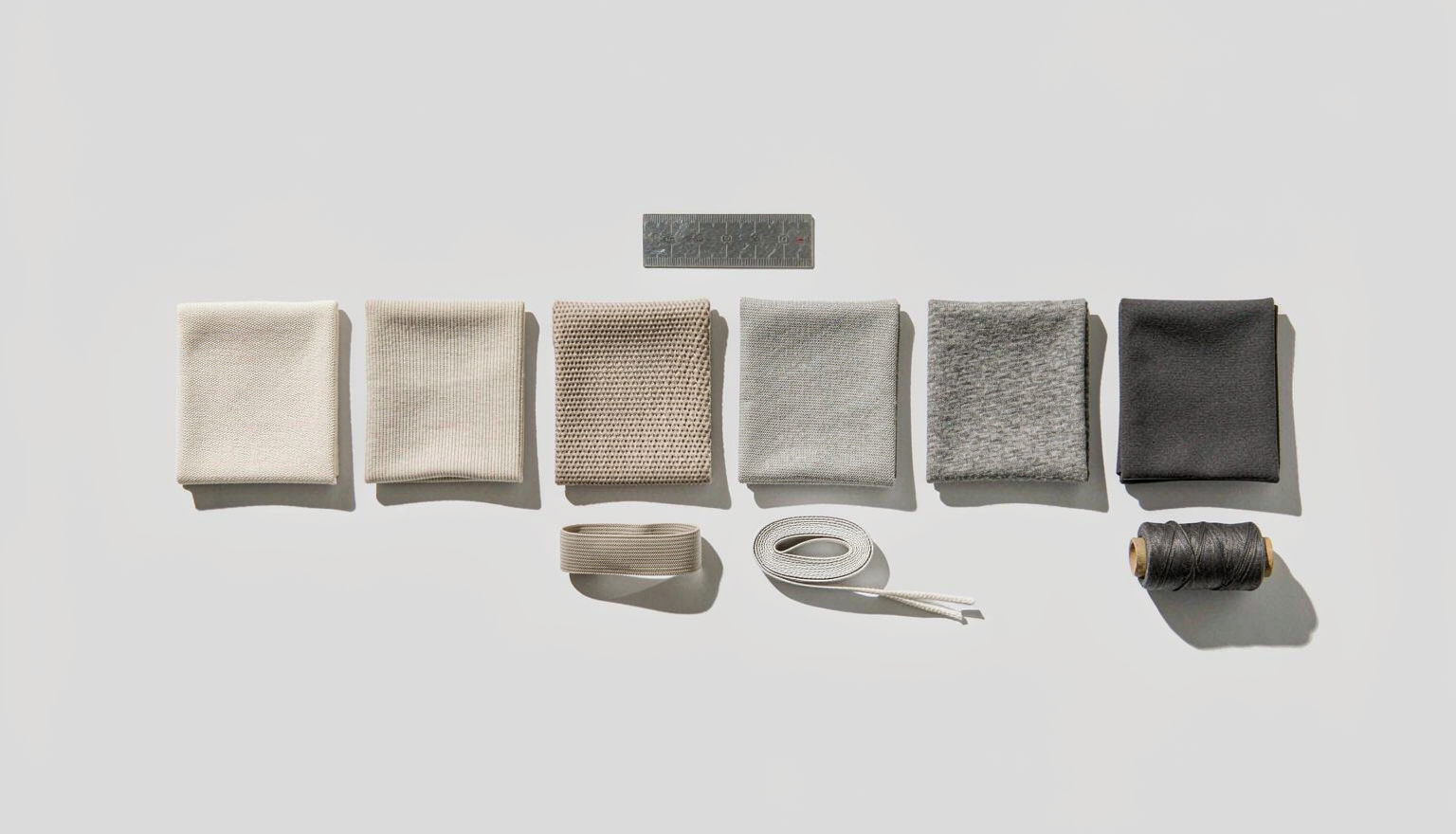
- Consolidate the bill of materials — including trims, threads, elastics and finishes, not just shell fabric.
- Add wash-resistance testing to proto and PP stages, and reconcile results with your care labelling.
- Record elastane percentage and construction disruptors per style, so design trade-offs are visible before scores are public.
- Collect recycled content at batch level with chain-of-custody documents, and verify definitions against ESPR terminology.
- Ask suppliers for structured data, not PDFs — the format is half the compliance problem.
- Assign an owner. This is a product development and supply chain project with a marketing output, not the other way around.
Common Questions
When will the apparel digital product passport become mandatory?
As of October 2026, Commission signals point to adoption of the textiles delegated act in Q3–Q4 2027 and mandatory application for textiles around 2029, following ESPR’s minimum 18-month transition period. These are indicative dates; nothing is binding until the delegated act is adopted and published.
Does the apparel DPP apply to brands outside the EU?
Yes. Obligations attach to products placed on the EU market regardless of where they are made. Under the JRC’s proposal, when the manufacturer is outside the EU, the importer becomes the responsible economic operator — which in practice means your EU customers will demand passport-ready data from you.
Which products are in scope?
Garments containing at least 80% textile fibres by weight, including sportswear and workwear. The proposal excludes intermediate products such as yarns and fabrics, smart and e-textiles, PPE, medical devices and textile toys. Footwear is on a separate track, with its own study expected by the end of 2027.
The Takeaway
The apparel digital product passport converts things brands used to assert — durability, recyclability, recycled content — into numbers that anyone can check. For product teams, that is less a compliance chore than a redefinition of what a well-made product looks like: cleaner compositions, tested construction, documented inputs, and factories that can supply data as reliably as garments. The brands that use 2026 and 2027 to build that muscle will experience 2029 as paperwork. The ones that wait will discover the hard part was never the QR code — it was the supply chain’s data.
—
References
- European Commission, Regulation (EU) 2024/1781 (ESPR), in force 18 July 2024. EUR-Lex: https://eur-lex.europa.eu/eli/reg/2024/1781/oj
- European Commission Joint Research Centre, Study on DPP content for textile apparel products under ESPR, 13 May 2026: https://susproc.jrc.ec.europa.eu/product-bureau/sites/default/files/2026-05/Textiles_DPP_20260513.pdf
- European Commission, Harmonised standards for Digital Product Passports (incl. Implementing Decision (EU) 2026/1736 of 14 July 2026): https://single-market-economy.ec.europa.eu/single-market/goods/european-standards/harmonised-standards/digital-product-passport-dpp_et
- Carbonfact, ESPR crash course — how ESPR will impact apparel and footwear brands (summary of JRC preparatory study LCA and proposed requirements): https://www.carbonfact.com/blog/policy/espr-textile
- SGS, EU ESPR JRC Study Proposes DPP Content Requirements for Textile Apparel, July 2026: https://www.sgsgroup.com.cn/en-cn/news/2026/07/safeguards-09126-eu-espr-jrc-study-proposes-dpp-content-requirements-for-textile-apparel
- Fairly Made, Digital Product Passport for Fashion: What It Is and How to Prepare (2026 Guide): https://www.fairlymade.com/legal-resources/digital-product-passport-for-fashion-what-it-is-and-how-to-prepare-2026-guide
- Waro, Textile DPP: Everything Fashion Brands Need to Know About the Future Digital Passport (substances of concern, ISO 14021 definitions): https://www.waro.io/en/blog/dpp-textile-tout-ce-que-les-marques-de-mode-doivent-savoir-sur-le-futur-passeport-numerique
- EU DPP trackers — textiles sector timeline and registry status: https://eudigitalproductpassport.org/sectors/textiles ; https://infodpp.eu/en/industries/textiles/
- European Parliament Legislative Observatory, Ecodesign for Sustainable Products Regulation summary (destruction ban dates): https://oeil.secure.europarl.europa.eu/oeil/en/document-summary?id=1785880
Note: all regulatory details reflect sources published as of October 2026. The textiles delegated act has not been adopted; final requirements, thresholds and dates may differ.